NVIDIA’s chip for Windows laptops, RTX Spark, has launched in Korea
Sales began on October 16, 2026
It combines the CPU and GPU into one chip that shares up to 128GB of memory
In Korea, the 32GB model starts in the ₩5 million range
 Hero image from the NVIDIA RTX Spark press release — Source: NVIDIA
What launched
 NVIDIA logo
On October 16, NVIDIA announced that RTX Spark laptops had gone on sale worldwide
It’s four months after the chip was unveiled at Computex 2026 in June
The first wave is nine models from six manufacturers
| Manufacturer | Model |
|---|---|
| ASUS | ProArt P14, ProArt P16 |
| Dell | XPS 16 |
| HP | OmniBook Ultra, OmniBook X 14 |
| Lenovo | Yoga Pro 9n |
| Microsoft | Surface Laptop Ultra |
| MSI | Prestige N16 Flip AI+, Prestige N16 |
In Korea, ASUS and MSI products launched first
The US starting price is $2,599 (₩3.64 million)
The specs, explained
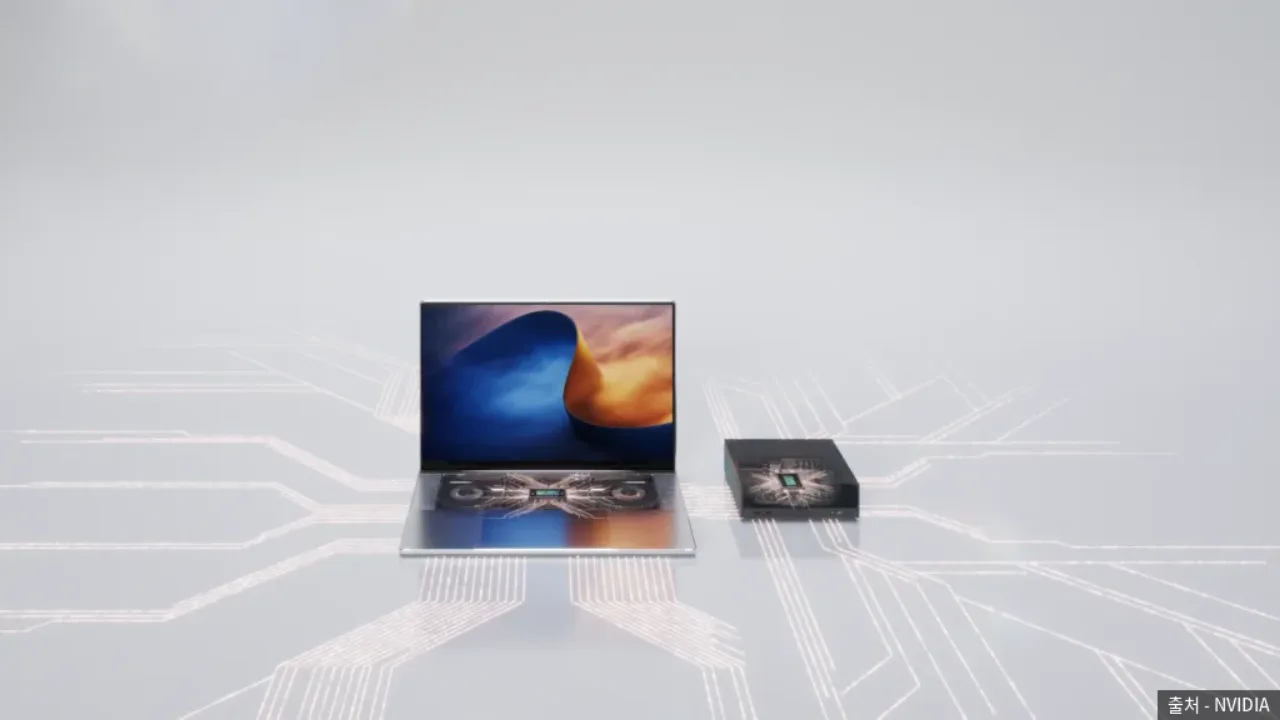 RTX Spark laptop and the small desktop due in November — Source: NVIDIA
The chip is called N1X
It’s a version of the GB10 from the DGX Spark AI workstation, with specs adjusted for Windows laptops
| Item | N1X |
|---|---|
| CPU | Arm 20 cores (10 X925 + 10 A725) |
| GPU | Blackwell, 6,144 CUDA cores |
| Memory | LPDDR5X up to 128GB |
| Memory bandwidth | 300GB/s |
| AI compute | 1 petaflop FP4 |
| Power draw | About 80W |
The CPU was co-designed with MediaTek
It’s a unified memory architecture in which the CPU and GPU share memory
The weights of large AI models can all be loaded into the laptop’s memory
NVIDIA gave the 74-billion-parameter model Nemotron 3.5 Bolt as an example
It’s shrunk to fit in 24GB of memory and run directly on the laptop
There’s also a lower-tier N1 chip with 18 cores, but at launch it ships only in laptops
Prices in Korea
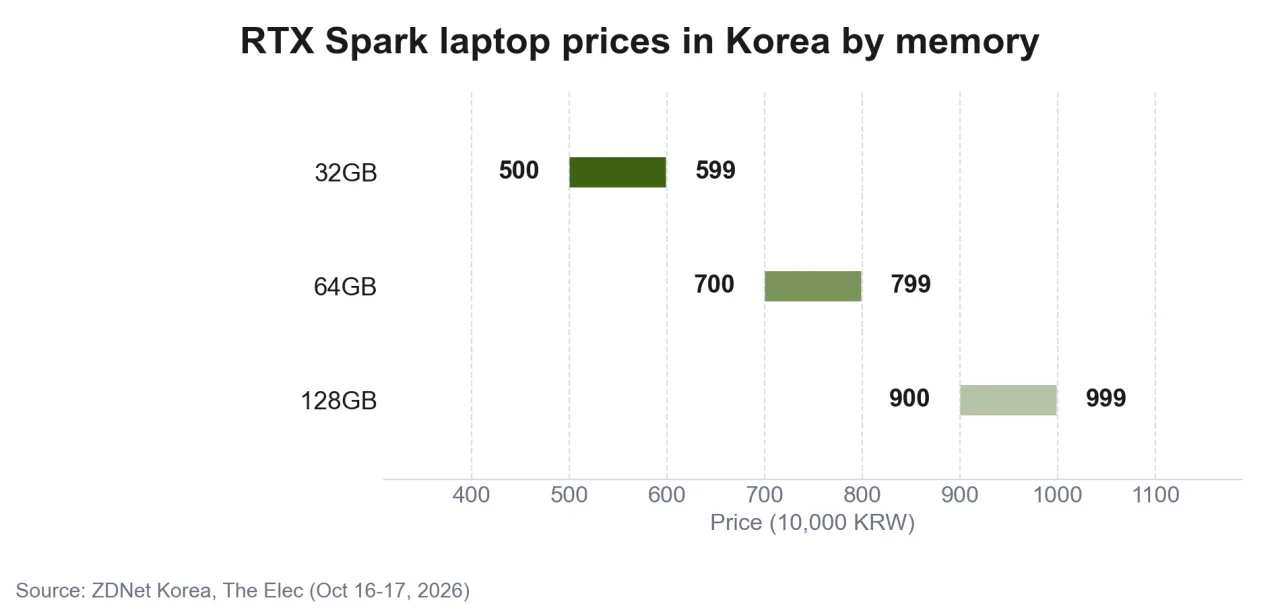 Bars showing Korean price ranges for RTX Spark laptops by memory — Source: self-rendered based on reports by ZDNet Korea and The Elec
32GB is in the ₩5 million range, 64GB in the ₩7 million range, and 128GB in the ₩9 million range
According to The Elec, the MSI Prestige N16 is the lowest price in Korea at ₩5,799,000
That’s more than ₩2 million above the US starting price of ₩3.64 million!!
The US starting price is for a 24GB configuration, so it’s hard to compare directly with the Korean 32GB model
NVIDIA cited rising memory prices as the reason for the high prices
One official said they didn't expect memory prices to rise this much
Performance in reviews
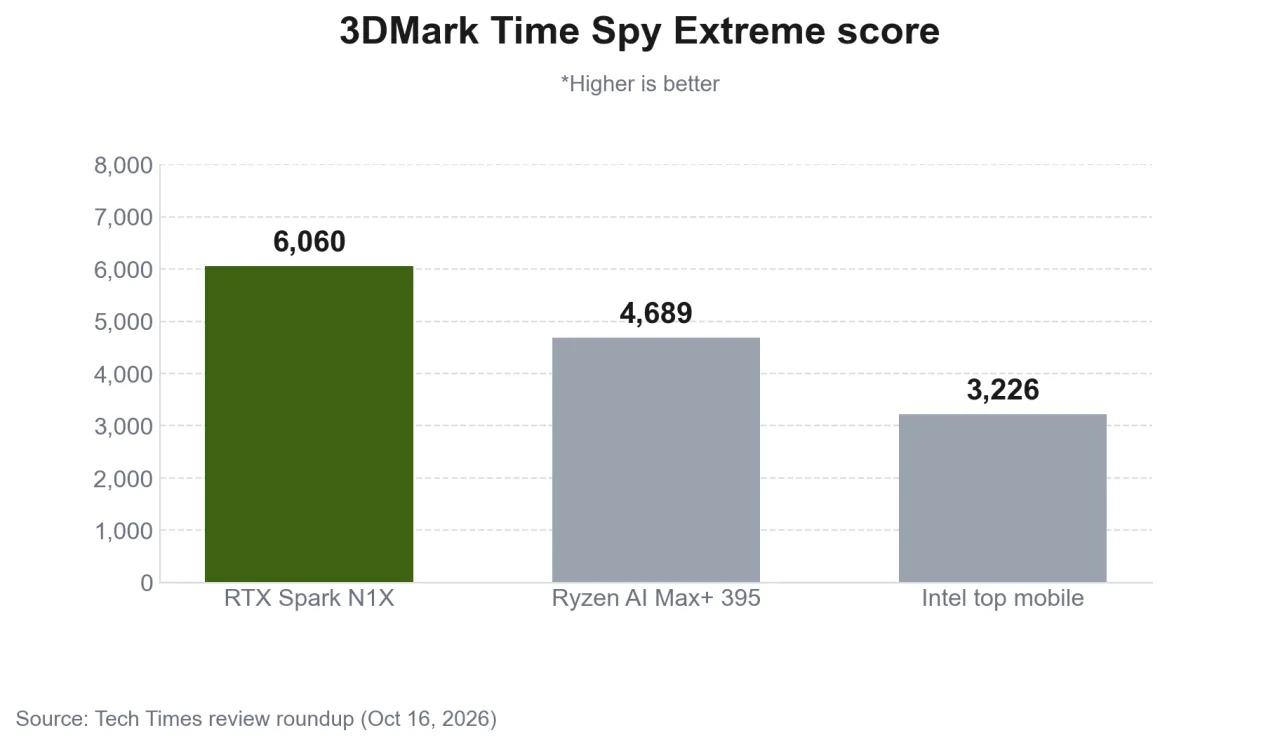 Bar chart comparing 3DMark Time Spy Extreme scores — Source: self-rendered based on the Tech Times review roundup
Overseas reviews came out all at once on October 15–16
The verdict converged on strong GPU performance but relatively weak CPU performance
[Graphics] 3DMark Time Spy Extreme 6,060 points, 29% higher than Ryzen AI Max+ 395
[Games] Cyberpunk 2077 at about 70fps at 1080p Ultra, about 47fps at QHD
[CPU] Multi-core at Apple M4 Pro level, single-core below the M5 generation (HotHardware)
[Battery] 14 hours 35 minutes of video playback (HotHardware)
NVIDIA touted 100fps or more in the latest games at 1440p, but review figures are lower than that
The 300GB/s memory bandwidth falls short of the up to 672GB/s of the RTX 5070 laptop GPU
Graphics scores are higher than the integrated chips compared, but discrete GPUs still lead in gaming performance
Compatibility and what’s still to come
 Microsoft logo
RTX Spark laptops run on Windows on Arm
Programs for x86 run through Microsoft’s emulator Prism, with some loss of performance
The main factor limiting games is anti-cheat compatibility
Games with Arm anti-cheat on launch day include Counter-Strike 2 and Fortnite
Kernel anti-cheat games without an Arm build won’t run even through Prism!!
EA’s anti-cheat doesn’t support Arm yet either, and Call of Duty is slated for support in 2027
League of Legends and PUBG: Battlegrounds aren’t on the announced support list
If there’s a game you play often, be sure to check before buying~
For development, a PyTorch-CUDA build for Windows on Arm came out for the first time
97% of the 15,000 most popular Python packages have Arm versions
A small desktop with the same chip launches in November
Sources
- [NVIDIA Newsroom] Announcement that RTX Spark PCs are on sale (2026-10-16)
- [NVIDIA Developer Blog] RTX Spark development environment, local models, November desktop (2026-10)
- [ZDNet Korea] Korean launch event and price ranges by memory (2026-10-17)
- [The Elec] Lowest Korean price, MSI Prestige N16 at ₩5,799,000, and N1X specs (2026-10-16)
- [Tech Times] Overseas review roundup, 3DMark, games, battery, anti-cheat (2026-10-16)
- [Windows Central] One-week review (2026-10-16)
- Exchange rate: converted at $1 ≈ ₩1,400