On September 20, 2026, Alibaba’s Qwen team released the weights of Qwen-Image-2.1, an image generation and editing model. Its generator is 7B (7 billion parameters), one third the size of the first Qwen-Image (20B) released in August 2025, yet it scored higher than Google’s Nano Banana 2.0 on Qwen’s own benchmark.
The license changed, though. The earlier Qwen-Image was Apache 2.0, free for commercial use, but 2.1 was released under the Qwen Research License, which allows use only for research and evaluation.
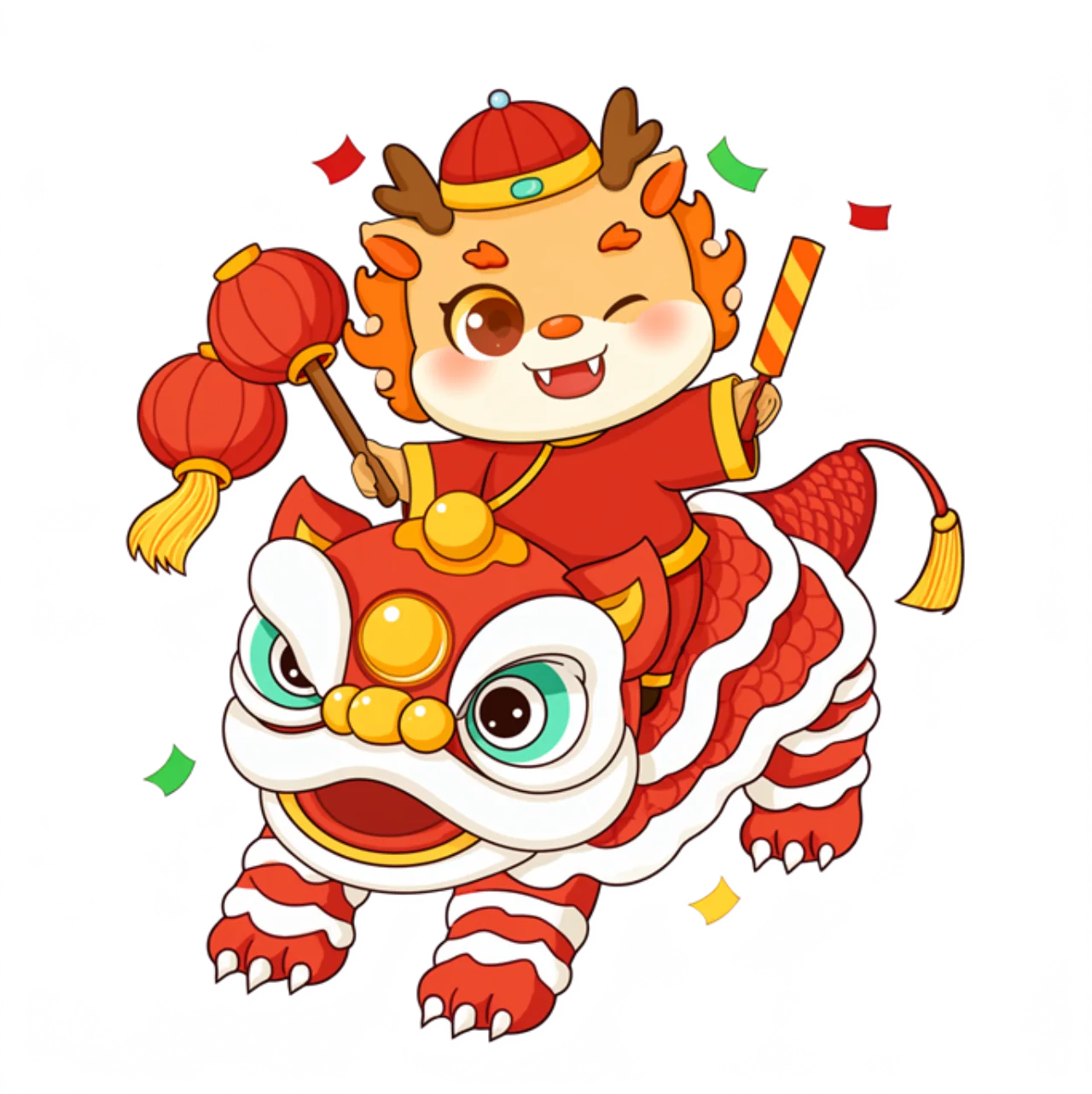 A character generated by Qwen-Image-2.1 directly on a transparent background — Source: Qwen
What was released
 Qwen logo — Source: Qwen
On September 20, the Qwen team published the weights on its GitHub repository, Hugging Face, and ModelScope, with day-one support for ComfyUI, Diffusers, vLLM-Omni, SGLang, and LightX2V. The gist of this version is combining text-to-image generation and editing of existing images in one model.
- 7B generator, a 32-layer Single-Stream DiT architecture
- Generates and edits transparent-background (RGBA) images from a prompt alone
- Takes up to 10 reference images for compositing and editing
- Local editing that marks the area to change with circles, scribbles, or masks
- Weights are free, but commercial use requires a separate agreement with Alibaba
The specs explained
Qwen-Image-2.1 keeps the generator that makes the image (7B) separate from the text encoder that reads the prompt. The text encoder is Qwen3-VL 8B, and images are made in a space compressed 16x in each dimension by a 64-channel RGBA autoencoder (VAE). Because the alpha channel is included from the VAE stage, it produces transparent PNGs without any background-removal post-processing.
Default output is 2048×2048, with seven aspect ratios from 1:1 to 16:9 and 9:16, up to 2752×1536. The official example defaults to 40 steps.
| Item | Qwen-Image-2.1 | First Qwen-Image |
|---|---|---|
| Generator parameters | 7B | 20B |
| BF16 weights | 14.2GB | 40.9GB |
| Generation and editing | One model | Separate Edit model |
| Transparent background | Built in | Separate Layered model |
| License | Research only | Apache 2.0 |
According to eesel AI’s measurements, the generator weights are 14.2GB in BF16 and 7.26GB with INT8 quantization, and with the text encoder offloaded to the CPU it produced one 1024×1024 image using 6.14GiB of VRAM.
MarkTechPost reported, however, that loading the 8B text encoder onto the GPU as well requires more than 24GB for the whole pipeline. A single RTX 4090 (24GB), common in Korea, can run it with quantization or offloading applied.
Benchmarks
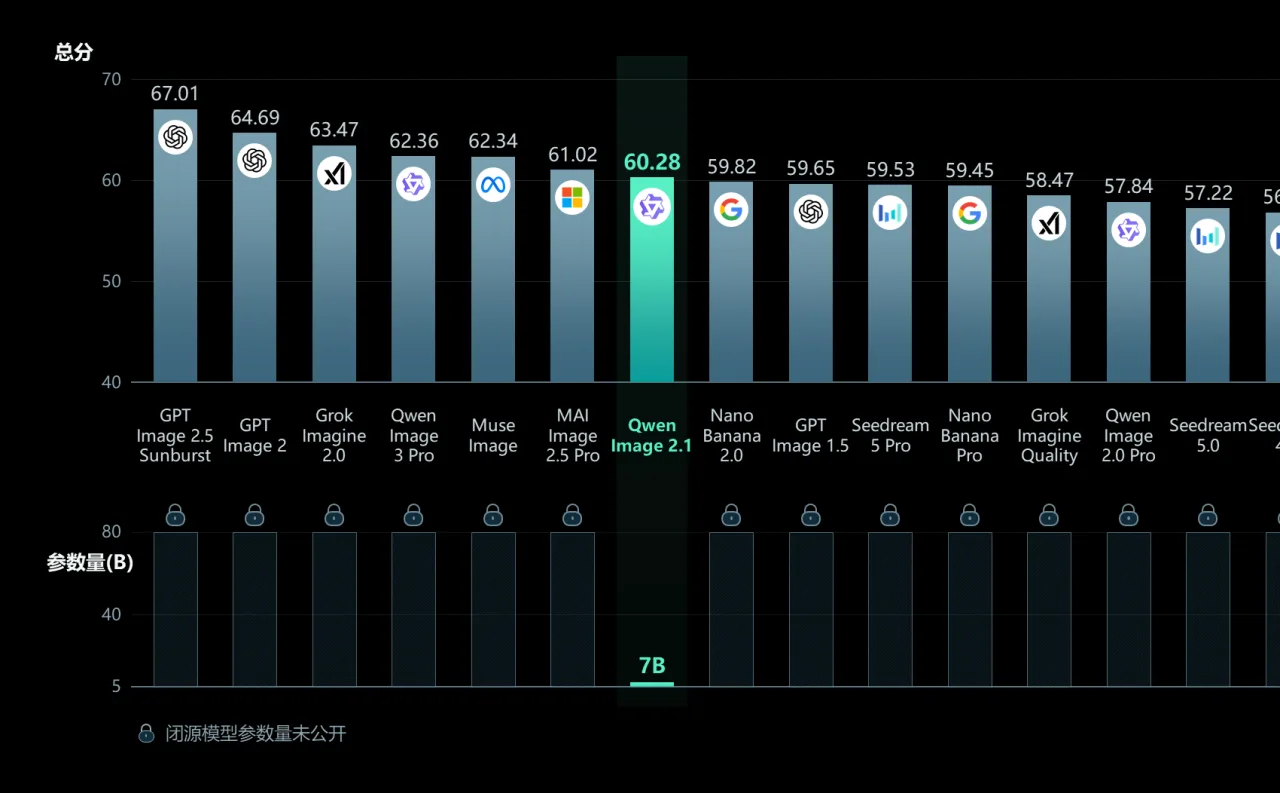 Top Qwen-Image-Bench total scores by model, with parameters — Source: Qwen
On the Qwen-Image-Bench total score Qwen published, 2.1 ranked 7th with 60.28. That is higher than Google Nano Banana 2.0 (59.82) and OpenAI GPT Image 1.5 (59.65), and 6.73 points behind first-place OpenAI GPT Image 2.5 Sunburst (67.01).
Among models that disclose their parameter counts, 2.1 scores highest. FLUX 2 Max (32B) scored 55.33 and Hunyuan Image 3.0 (80B) scored 50.81.
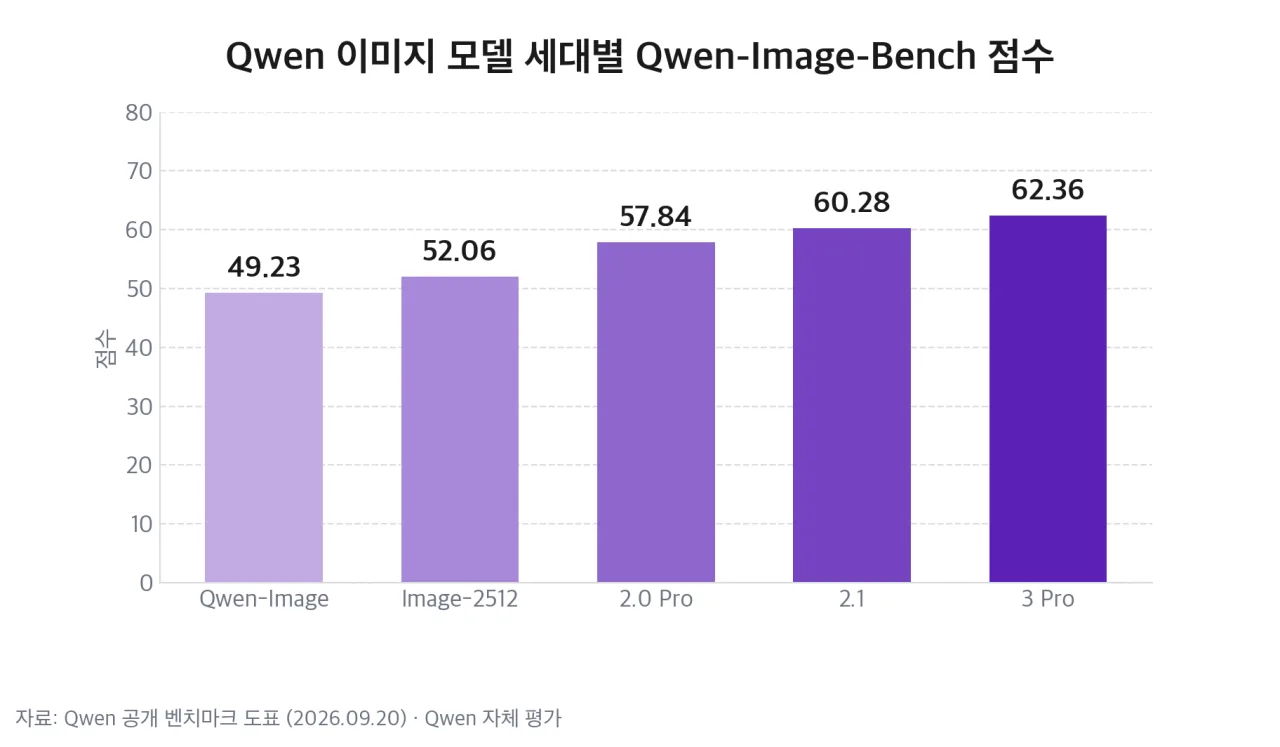 Qwen-Image-Bench scores across generations of Qwen image models — Source: self-rendered from Qwen’s published benchmark chart
Among Qwen’s own models, 2.1 is more than 8 points higher than the first Qwen-Image (20B) at 49.23 and Qwen-Image-2512 (20B) at 52.06. It is 2.08 points behind Qwen Image 3 Pro (62.36), which is sold only through the API.
This is an in-house benchmark built and scored by Qwen. eesel AI’s review points out that the evaluation items and scoring method have not been independently verified, and results from outside leaderboards such as LMArena have not been published yet.
Three features
Transparent-background generation and editing
As with the character at the top, it makes PNGs with transparent backgrounds from a prompt alone, and when editing a transparent layer it keeps it transparent instead of filling the background with white. It can also separate just the subject from an ordinary photo and generate it as an RGBA cutout. Qwen released a dedicated transparent-layer model, Qwen-Image-Layered, in December 2025; 2.1 folds that capability into the base model.
Area-specific local editing
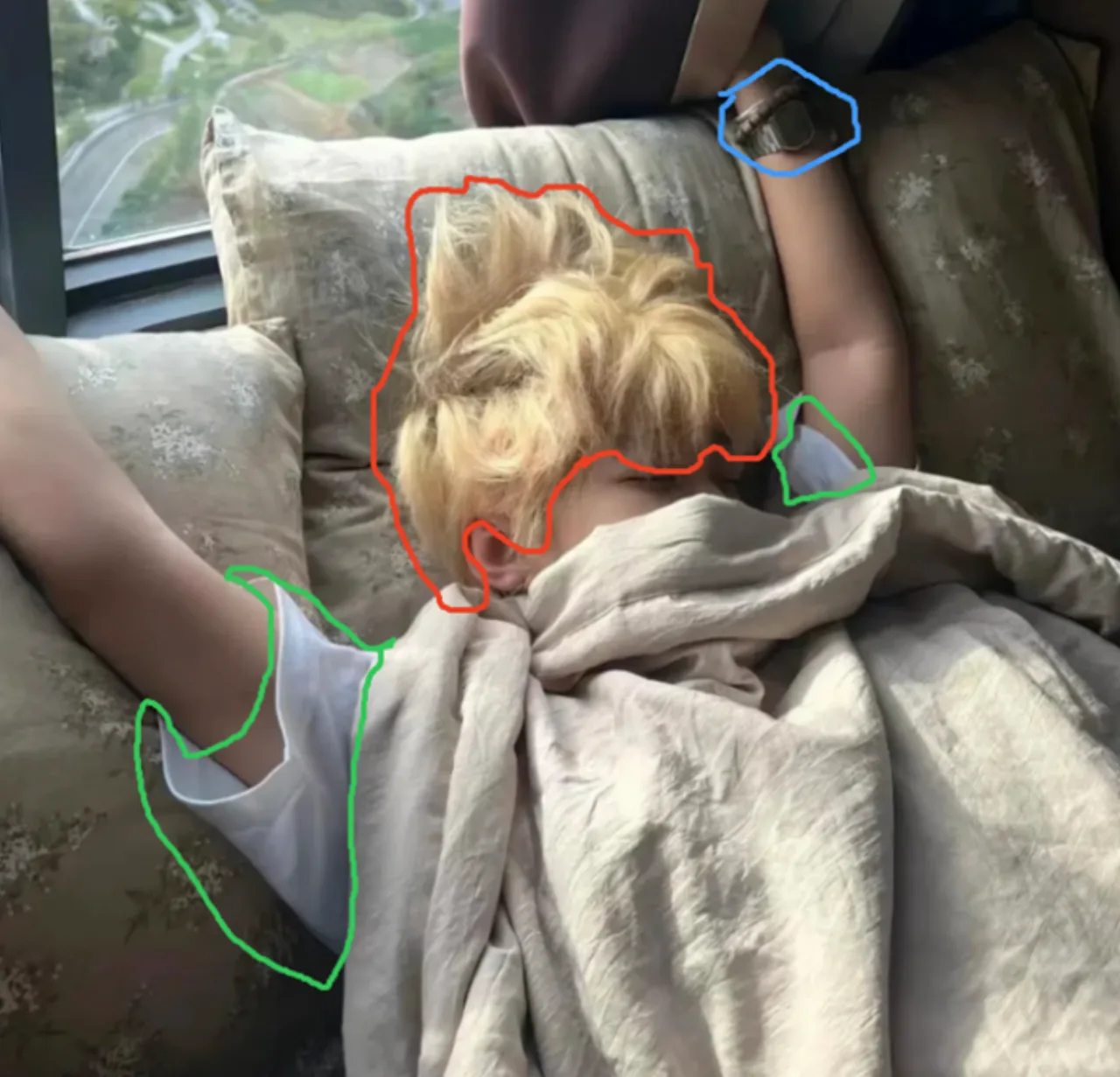 Editing input with the area to change marked by a colored outline — Source: Qwen
You can circle the area to change in color, scribble over it, or pass a mask file. It accepts up to 10 reference images and composites people or products into new scenes while keeping their appearance.
Text rendering
 Example of text rendered as a paper-style diagram — Source: Qwen
The first Qwen-Image was strong at drawing Chinese and English text accurately inside images, and 2.1 also features text-heavy examples like diagrams and posters as key cases. The 2.1 announcement, however, has no figures on multilingual text rendering, and its example prompts are English only. It makes no official mention of Korean (Hangul) rendering.
The license change
The Qwen Research License permits use and modification “for non-commercial purposes only,” defining non-commercial as “research or evaluation purposes.” Commercial use requires a separate agreement with Alibaba, and the application process and fees have not been made public.
| Model | Released | Weights and terms |
|---|---|---|
| Qwen-Image | August 2025 | Open · Apache 2.0 |
| Qwen-Image-2512 | December 2025 | Open · Apache 2.0 |
| Qwen-Image-3.0 | July 2026 | Closed · API only |
| Qwen-Image-2.1 | September 2026 | Open · research only |
Alibaba’s paid image API uses Qwen-Image-3.0, unveiled on July 21 and officially launched on August 5. 3.0 is closed, with neither weights nor a technical report, and there is no paid API running 2.1. Outside hosts such as fal.ai and Replicate also offered only earlier versions as of late September.
On September 23, issue #13 was filed on GitHub asking for the license to be reverted to Apache 2.0, and a post calling it “a model I can’t use because of the license” appeared on the Hugging Face discussion board.
The issue’s author argued that most Qwen language models are Apache 2.0, making the image model the exception, and that Apache 2.0 is what spread Qwen across the Ollama, vLLM, and ComfyUI ecosystems. No official response from the Qwen team has been confirmed.
What it means for users in Korea
Transparent-background generation and subject cutouts overlap with product background removal (누끼), a common task for Korean online shops. But making images to post on Smart Store or Coupang product pages is for sales, which falls outside research and evaluation. Testing its performance locally as an individual is within the license; to use it for business, you need an agreement with Alibaba or the earlier Apache 2.0 Qwen-Image models.
The free web demo the GitHub README points to, wuli.art, is aimed at users in mainland China, so there is no official web service to try it right away from Korea. For running it locally, ComfyUI had day-one support and is the fastest route.
What to watch next
- The Qwen team’s official position on license requests such as issue #13
- Its ranking on outside leaderboards such as LMArena and the gap from its in-house benchmark score
- Whether a commercial license application channel and fees are published
- Whether outside API hosts such as fal.ai and Replicate offer 2.1
Sources
- [Qwen] Qwen-Image-2.1 GitHub repository README (architecture, features, benchmark charts, source of four images in this post)
- [Hugging Face] Qwen/Qwen-Image-2.1 model card (resolution, license)
- [MarkTechPost] Alibaba Qwen Releases Qwen-Image-2.1 (VAE architecture, pipeline VRAM)
- [DataNorth] Qwen releases Qwen-Image-2.1 (release date, benchmark comparison)
- [eesel AI] Qwen Image 2.1 review (weight sizes, measured VRAM, outside hosting)
- [OrcaRouter] Qwen-Image 2.1 vs Qwen-Image 3.0 (3.0 unveiling and launch dates)
- [GitHub] QwenLM/Qwen-Image-2.1 Issue #13 (request to revert to Apache 2.0)
- [heise online] Qwen-Image-2.1: Alibaba’s new AI image model with transparency feature (multilingual text rendering unconfirmed)