Humanoids Summit Seoul 2026 was held on September 22 and 23, 2026, in the Grand Ballroom of COEX in Seoul. The event, which started in Silicon Valley in 2024 and passed through London and Tokyo, came to Korea for the first time, with official sponsorship from the Ministry of Science and ICT.
More than 30 robotics and AI companies from Korea and abroad gathered, and taken together the presentations covered almost every field needed to build a single humanoid. Sorting the exhibitor list into three fields — full robots, hands and training data, and parts and compute — shows what role Korean companies play.
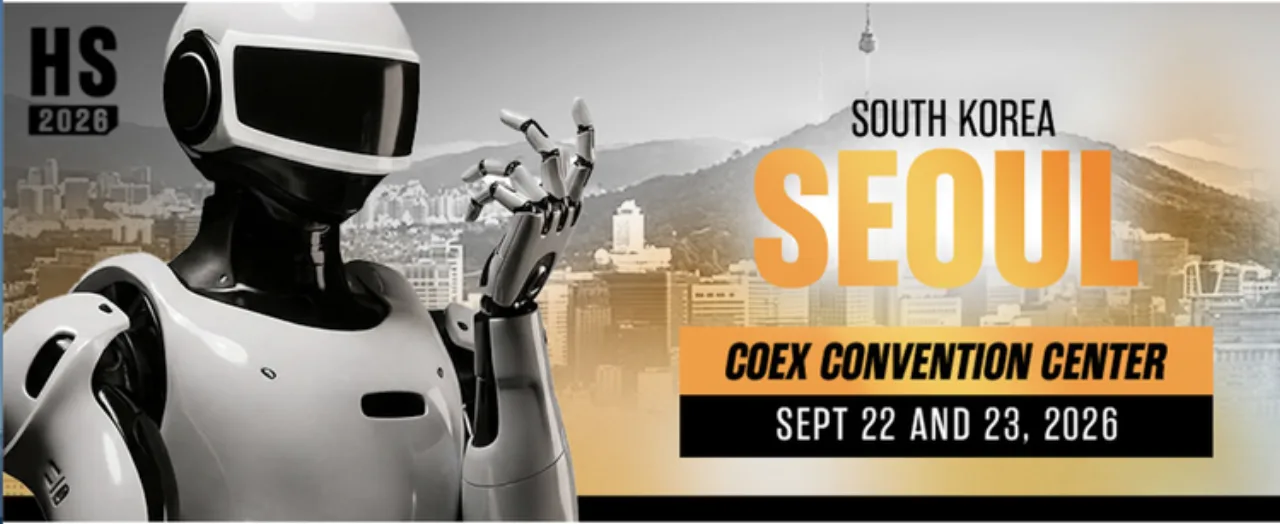 Official key visual for Humanoids Summit Seoul 2026 — Source: Humanoids Summit
Event overview
The two-day event was built around a conference, robot exhibits and demos, and startup pitches, with tickets at about $1,000 (₩1.4 million). At the opening ceremony on day one, Ryu Je-myung, Second Vice Minister of Science and ICT, gave congratulatory remarks, and the government framed the next three years as the critical period for securing physical AI competitiveness.
- Day-one keynotes: Nic Radford, co-founder of Persona AI, and Ryu Jung-hee, CEO of RLWRLD
- Featured speakers: Ali Agha of FieldAI, ROBOTIS CEO Kim Byoung-soo, Steve Xie of Lightwheel, Unitree’s Asia-Pacific head
- Technical workshop: run jointly by NVIDIA and ROBOTIS
- Companies attending: Samsung Electronics, LG Electronics, HL Group, Doosan Robotics, Qualcomm, AWS, Bear Robotics, and others
The Ministry of Science and ICT announced plans to launch a large R&D program for robot foundation models and world models starting in 2027, and to build a physical AI data library. The idea is to widen application from postal services and logistics to manufacturing and care.
Exhibitors by supply-chain segment
| Segment | Exhibitor | What they showed here |
|---|---|---|
| Full robots | Persona AI | Shipyard welding humanoid |
| Full robots | Unitree | G1 voice-operated demo |
| Full robots · platform | ROBOTIS | AI Sapiens, 10,000 units a year |
| Hands · models | RLWRLD | RLDX-1, a five-finger robot hand model |
| Robot brains | FieldAI | Foundation models for robots |
| Training data | Lightwheel | Simulation data |
| Compute · chips | NVIDIA · Qualcomm | GR00T models · IQ10 chip |
| Parts · buyers | HL Group · Doosan · Samsung · LG | Attending |
Had the event gathered only companies building complete robots, ROBOTIS would have been the sole Korean exhibitor. Broken out by segment, Korean companies cluster more in hands and models (RLWRLD), platforms (ROBOTIS), parts (HL Mando), and buyers (shipbuilding, logistics).
Full robots, for shipyards and hazardous work
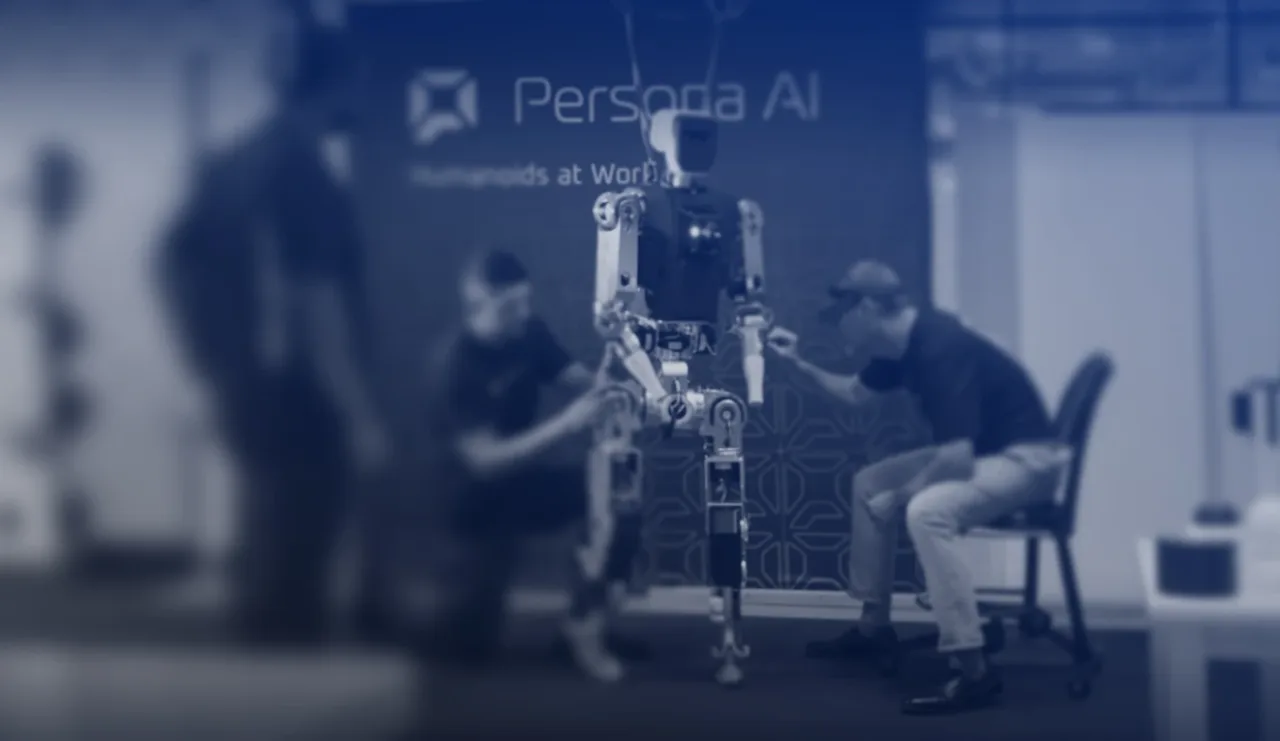 Persona AI industrial humanoid — Source: Persona AI
Houston-based Persona AI was founded by Radford, formerly of NASA’s robotics lab, and set out from the start to build humanoids for shipyard work. It has a shipyard deployment agreement with HD Hyundai and is co-developing shipyard welding robots with HD Hyundai’s shipbuilding affiliates and HD Hyundai Robotics. It said it is also working with POSCO.
The company’s chief business strategy officer, Michael Perry, told Seoul Shinmun that humanoids offer greater economic value in shipbuilding than in automotive. Using one around the clock in a car plant means handling 15–16 slightly different jobs, whereas shipyards face a shortage of skilled labor and an environment mixing welding, dust, rain, and metal fragments, leaving plenty of work for a humanoid. The schedule calls for a prototype within 2026, with field trials and commercialization starting in 2027.
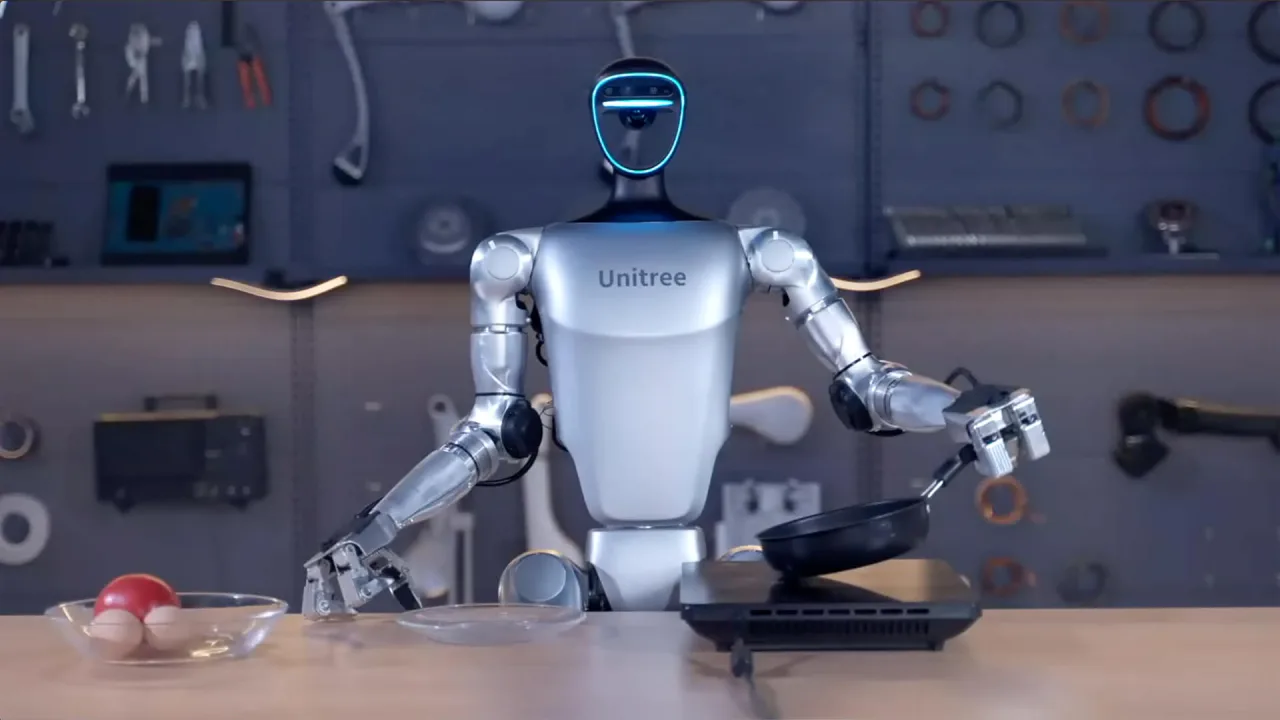 Official image of a Unitree humanoid — Source: Unitree Robotics
China’s Unitree brought its G1 — 132cm tall, 35kg — and demonstrated it moving by voice alone with no prior programming. It named environments people struggle to endure, such as high heat and noise, as its main market, and has open-sourced a whole-body control foundation model. In August 2026 the company priced its IPO on Shanghai’s STAR Market at a valuation of about $9 billion (₩12.6 trillion).
Hands and training data
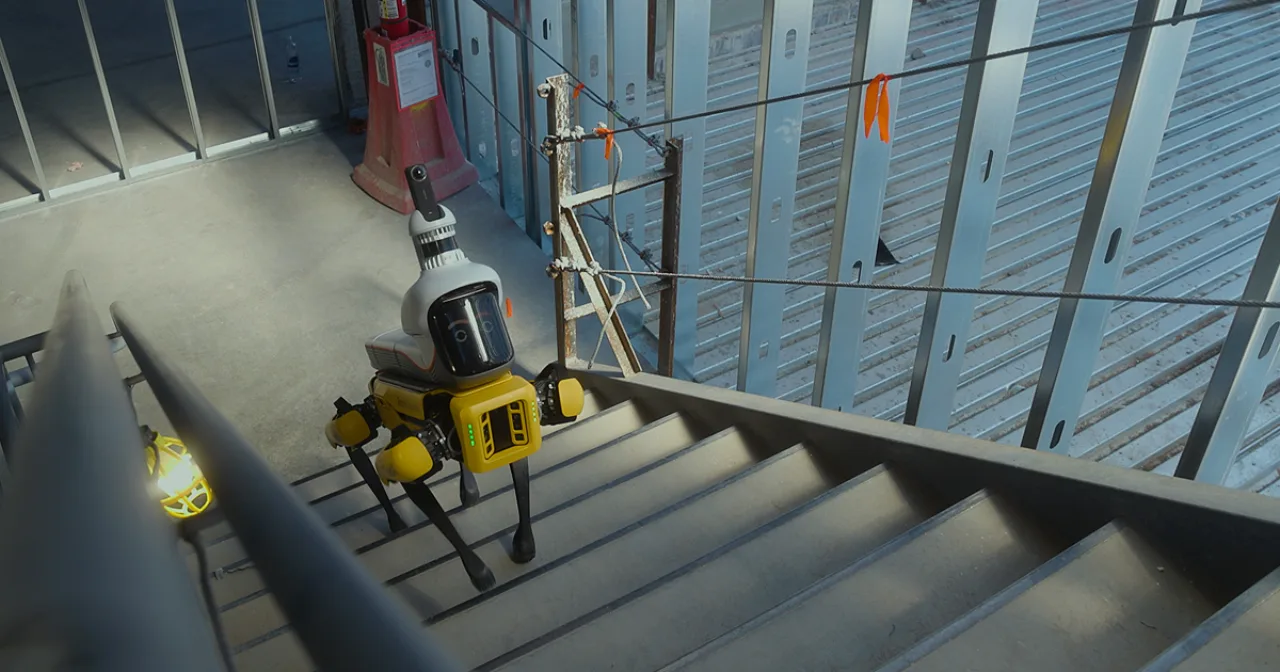 A quadruped robot climbing stairs with FieldAI software — Source: FieldAI
Korean startup RLWRLD took part as an official technology partner and gave a keynote on industrial dexterity for five-finger robot hands. It is developing RLDX-1, a robot foundation model handling vision, language, and motion in one model, and laid out a strategy of deploying to industrial sites first to collect data, using that data to improve the model, and then widening the deployment. It is expanding its logistics-focused physical AI partnership with CJ Logistics.
FieldAI doesn’t build robot bodies; it builds software that lets existing robots move autonomously at sites without GPS. In August 2025 it raised about $405 million (₩567 billion) at a valuation of roughly $2 billion (₩2.8 trillion), with NVIDIA’s investment arm participating.
Lightwheel builds simulation environments and data for robot training. On August 26, 2026, it released 10,000 hours of first-person human task video, with plans to grow the set to more than 15,000 tasks and 100,000 hours. Because recordings of humans first demonstrating what a robot will do become the training material, specialist companies are emerging in the data segment.
Parts and compute
 NVIDIA logo — Source: NVIDIA
NVIDIA held a joint workshop with ROBOTIS and introduced its robot foundation model Isaac GR00T 1.7 and the next-generation GR00T 2. GR00T 2 is planned for early access within a few months. ROBOTIS explained that it used the synthetic data tool Cosmos Transfer to turn scenes that confuse real cameras, such as shadows, into training data.
 Qualcomm logo — Source: Qualcomm
Qualcomm announced the Dragonwing IQ10, a processor for humanoids, at CES 2026. It touts up to 700 TOPS of on-device AI performance, 18 CPU cores, and direct connection of 12 cameras, with worldwide commercial availability in September 2026. The summit coincided with the compute layer shifting from NVIDIA alone to multiple suppliers.
HL Mando, part of the HL Group on the attendee list, is developing humanoid actuators bundling motors, reducers, sensors, and controllers. The targets are a finished model in the second half of 2026, orders in 2027, and mass production in 2028. The trend of overseas humanoid companies seeking second sources to reduce dependence on Chinese parts is the basis for analysts’ expectations for HL Mando.
Where Korean companies stand
 ROBOTIS logo — Source: ROBOTIS
ROBOTIS CEO Kim Byoung-soo said the company will ramp up production of AI Sapiens, its humanoid built with in-house actuators, from 2027 to around 10,000 units a year. It is an open-humanoid strategy that publishes the hardware design along with simulation, data, and operations software, aiming to make the humanoid a general-purpose platform for apps. He also described giving university students nothing but the robot and the open source and, within a month, seeing them implement dancing, handstands, and crawling.
Doosan Robotics is aiming at industrial humanoids built for getting work done rather than imitating the human form, expanding from collaborative robots to one arm, two arms, and then mobile configurations, with proof of concept in 2028. Samsung Electronics and LG Electronics are building organizations and securing parts with a target of unveiling humanoids in 2027.
Samsung and LG to Unveil Humanoids in 2027 — How They Assembled the Teams and Parts (in Korean)
Deloitte’s view of the commercialization order
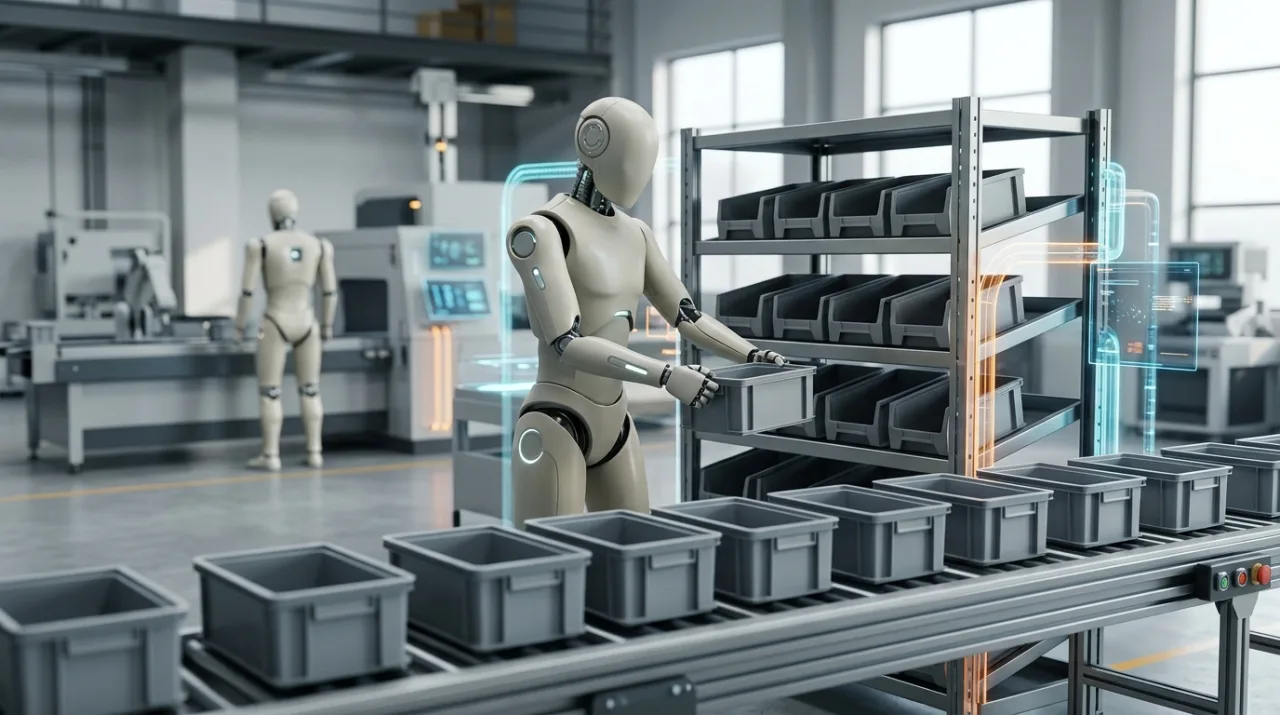 Concept image of a humanoid handling a narrow, repetitive task — Source: concept image · self-generated with agy
A September 2026 report from Deloitte Group Korea, “The Rise of Humanoid Robots and Market Entry Strategies by Key Industry,” saw the key to commercialization not as performance but as limited tasks where the economics work. Its conclusion is to prove return on investment in one task first, rather than leading with general-purpose capability, and to treat data accumulated on site as the competitive advantage.
| Report item | Figure |
|---|---|
| Global market, 2023 | about ₩2.1 trillion |
| Global market, 2035 forecast | about ₩53.2 trillion |
| Current industrial price | ₩140 million and up |
| Price range for mass adoption | ₩28–42 million |
| Vs. alternative automation | 40–60% more expensive |
The report’s demonstrated cases are simple repetitive work as well. Figure AI’s Figure 02 worked 10 hours a day, 5 days a week for 11 months at BMW’s plant in South Carolina, moving more than 90,000 parts, and UBTech deployed 100–200 units at BYD’s plants in China. It named six promising industries: manufacturing and logistics, automotive, retail and customer service, healthcare, construction and mining, and education.
The summit presentations laid out the same strategy. Persona AI chose shipyard welding, Unitree high-heat and high-noise environments, and RLWRLD logistics sites — each applying the technology to one task first. Perry argued that shared autonomy, where a robot performs set tasks and a human intervenes remotely in ambiguous situations, is necessary, and that getting safety, IT integration, battery management, and worker rules in place takes about two years.
What to watch next
- Whether ROBOTIS equips production facilities for 10,000 AI Sapiens units a year, as its 2027 ramp-up targets
- Whether Persona AI and HD Hyundai’s welding humanoid enters shipyard field trials in 2027
- Whether HL Mando’s actuators win their first orders in 2027
- The budget and participating companies for the Ministry of Science and ICT’s robot foundation model program
- When NVIDIA’s GR00T 2 early access opens
Sources
- [Newswire] Humanoids Summit Seoul 2026 program and speakers announced (2026-09-17)
- [RoboticsTomorrow] Humanoids Summit Seoul, official Ministry of Science and ICT sponsorship announced (2026-09-17)
- [NewDaily] Event scale, government policy direction, ROBOTIS and Unitree presentations (2026-09-22)
- [Aju Business Daily] On-site report, Persona AI remarks and the Unitree G1 demo (2026-09-22)
- [Electronic Times] The shifting axis of humanoid competition: field deployment, AI, data (2026-09-22)
- [Money Today] ROBOTIS’s 10,000-unit-a-year plan and the NVIDIA GR00T workshop (2026-09-22)
- [Seoul Shinmun] Interview with Persona AI’s Michael Perry on shipbuilding applications (2026-09-23)
- [AI Matters] RLWRLD keynote, RLDX-1 and the CJ Logistics partnership (2026-09-23)
- [AI Matters] Deloitte report’s demonstrated cases and price outlook (2026-09)
- [Robot Newspaper] Deloitte’s six promising humanoid industries (2026-09)
- [The Robot Report] Persona AI funding and the HD Hyundai shipyard deployment agreement
- [TechCrunch] FieldAI raises $405M (2025-08-20)
- [CNBC] Unitree prices IPO at a $9 billion valuation (2026-08-06)
- [Runtime Wire] Lightwheel releases 10,000 hours of first-person task video
- [Qualcomm] Dragonwing IQ10 robotics processor
- [HL Group] HL Mando humanoid actuator roadmap
- [ZDNet Korea] Doosan Robotics targets industrial humanoids in 2028 (2026-06-25)
- Exchange rate: converted at $1 ≈ ₩1,400