From 2022 to August 2026, there were 144 cases in which public agencies were penalized for personal data leaks The leak size stated in the penalty decisions is 9,019,433 records
On October 14, lawmaker Park Sung-hoon (People Power Party, National Policy Committee) disclosed data he received from the Personal Information Protection Commission By number of penalties, work errors were the most common; by number of leaked records, hacking was
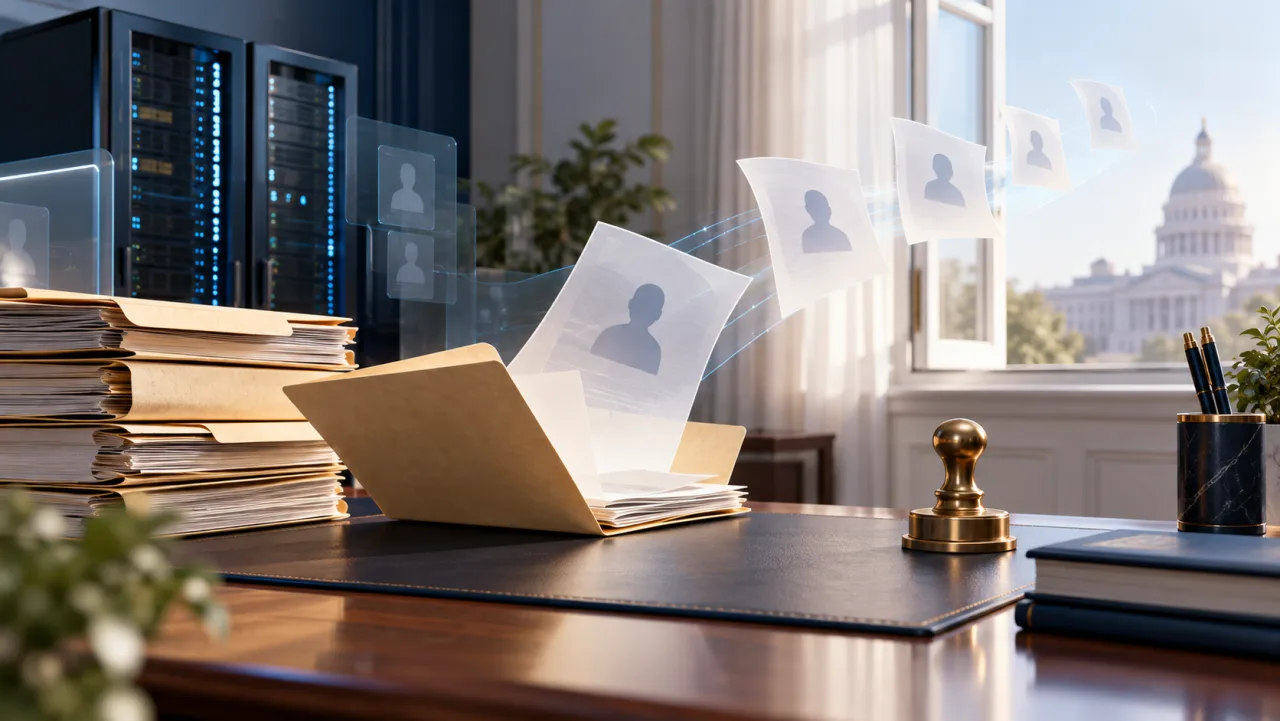 Concept shot of personal data leaking out of public agency files and servers — Source: concept shot, self-generated with agy
Causes of the 144 penalties
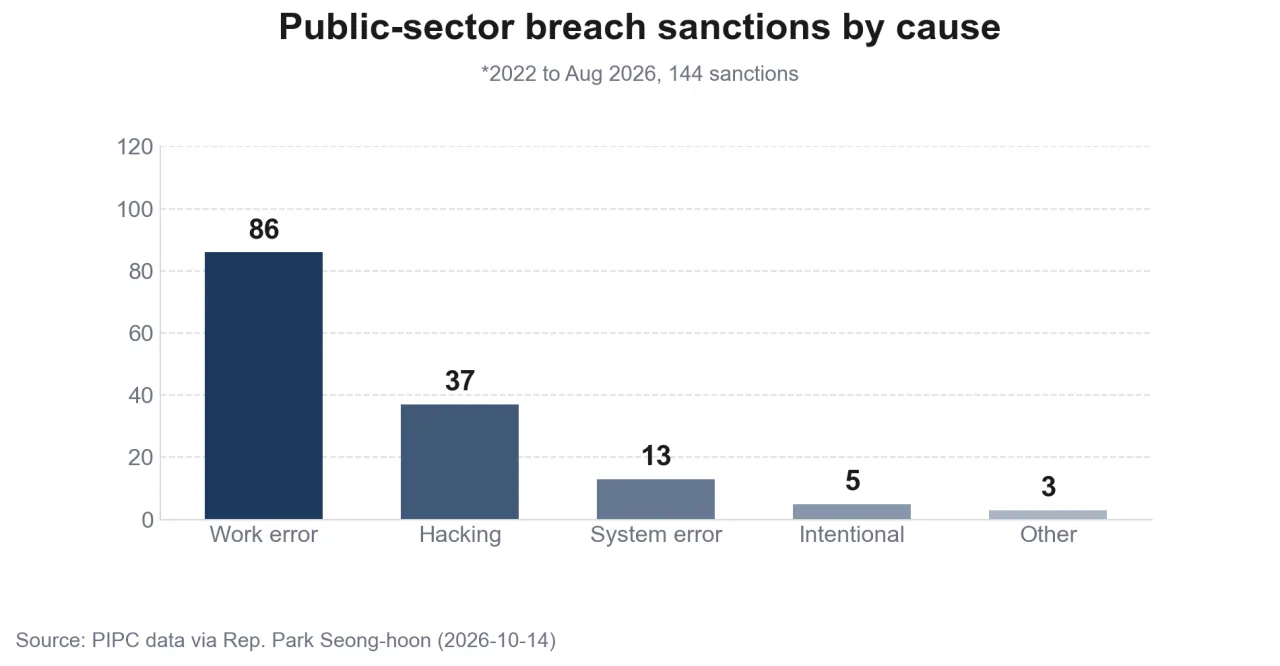 Bar chart of the 144 public agency leak penalties by cause — Source: self-rendered based on data submitted by the Personal Information Protection Commission
Of the 144 penalties, work errors were the most common at 86 (59.7%) Hacking accounted for 37 (25.7%), system errors 13, intentional leaks 5, and other causes 3
Park pointed out that public agencies have far more leaks from work errors than from hacking, and said their management systems need to be reviewed
Size of leaks by cause
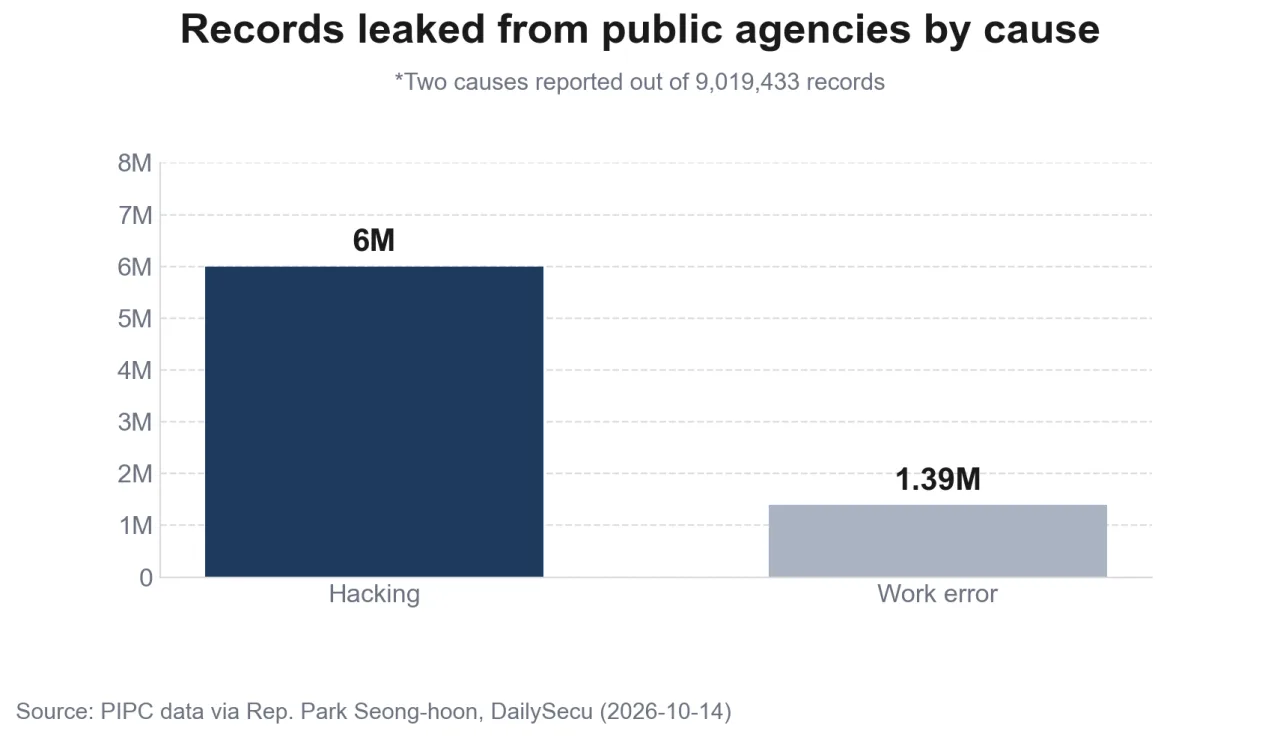 Bar chart comparing the number of personal data records leaked through hacking and through work errors — Source: self-rendered based on data submitted by the Personal Information Protection Commission
Compared by number of leaked records rather than number of penalties, the ranking is reversed
Data leaked through hacking amounted to 6,001,145 records (about 66.5%) Work errors accounted for 1,393,766 records (15.5%)
In this tally, work errors drew more penalties but leaked less than hacking Hacking drew fewer penalties but leaked more data
| Agency | Leaked records |
|---|---|
| Gyeonggi Provincial Office of Education | 2,966,485 |
| Korea National Council on Social Welfare | 1,353,327 |
| National Center for the Rights of the Child | 1,146,113 |
The top three agencies by leak size total about 5.46 million records, about 60% of the whole
Penalties by year and the share with disciplinary recommendations
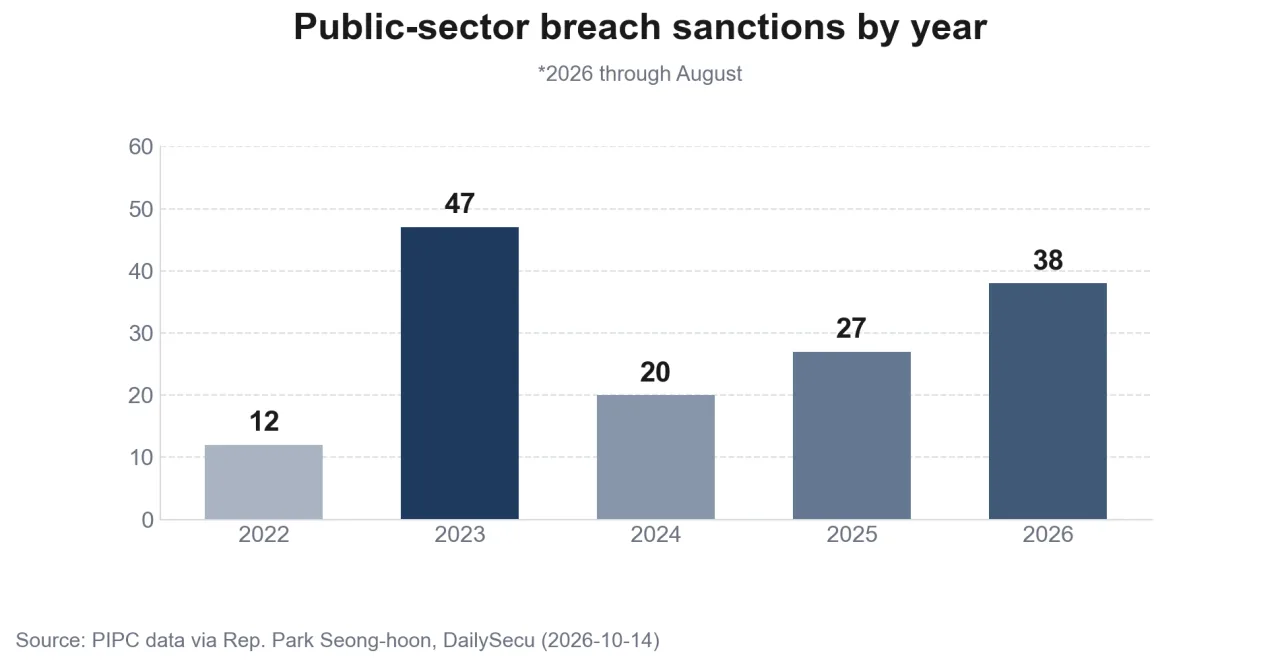 Bar chart of public agency leak penalties by year from 2022 to August 2026 — Source: self-rendered based on data submitted by the Personal Information Protection Commission
Penalties peaked at 47 in 2023 2026 already had 38 through August, exceeding the 27 for all of 2025
Monetary sanctions were 33 penalty surcharges totaling ₩5,402,650,000 and 97 administrative fines totaling ₩464,000,000 The total is about ₩5,866,650,000
Penalties that included a disciplinary recommendation were 9 of 144 (6.3%)
The disciplinary recommendation share is based on the commission’s penalty decisions It does not include disciplinary actions agencies took on their own
When notification is delayed
At the Health and Welfare Committee’s parliamentary audit the same week (October 16), the National Health Insurance Service case came up
An employee who had provided subscriber and dependent data to outsiders without authorization for about two and a half years, taking money in return, was dismissed in July Three months later, victims still had not been notified
The agency said it could not identify the leaked data and victims because an investigation was under way Lawmaker Kim Ki-woong said it was hard to accept delaying notification to victims when there were access records
📜 The notification order set by law
Article 39 of the Enforcement Decree of the Personal Information Protection Act requires notifying data subjects within 72 hours of learning of a leak The allowed reasons for delay are when urgent blocking and recovery measures are needed and unavoidable cases such as natural disasters
Even if the leaked items or timing haven’t all been confirmed, the fact of the leak and what has been confirmed so far must be notified first If contact details are unknown, posting on the website for 30 days or more can stand in for notification
An ongoing investigation is not a reason for delay listed in the decree How the commission will apply this standard in actual penalties has not been settled yet
I covered the 72-hour notice and the possible-leak notice system in a September post
🔗 Link - https://blog.naver.com/rottensweetpotato/224411377067
What to do now
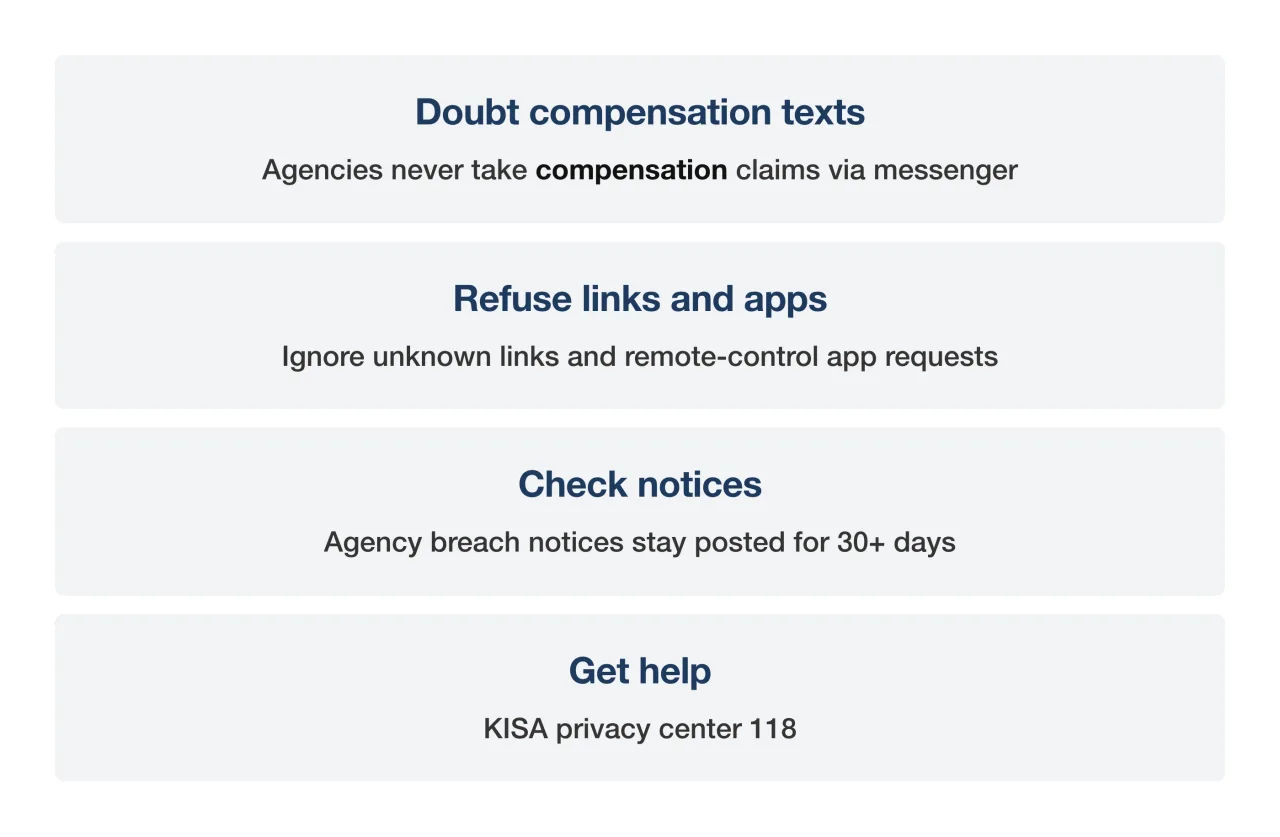 Four steps people affected by public agency leaks should take now — Source: self-rendered based on KISA and the Enforcement Decree of the Personal Information Protection Act
When news of a leak comes out, there are cases of text messages impersonating the agency and promising compensation KISA says there is no government-level individual compensation procedure, and agencies do not take damage compensation claims through messengers
You can check suspicious texts with the smishing check service on the KakaoTalk channel Bohonara (보호나라)
🔗 Link - https://privacy.kisa.or.kr
Sources
- [DailySecu] 144 public agency leak penalties, 9.01 million records (2026-10-14, leaked records by cause and penalties by year)
- [Money Today] Lawmaker Park Sung-hoon: work-error leaks at public agencies 2.3 times hacking (2026-10-14)
- [Kuki News] NHIS employee data leak, no victim notification for three months (2026-10-16)
- [Korea Law Information Center] Personal Information Protection Act Article 34, Enforcement Decree Articles 39 and 40 (effective 2026-09-11)
- [Block Media] KISA warns of texts and calls impersonating damage compensation